
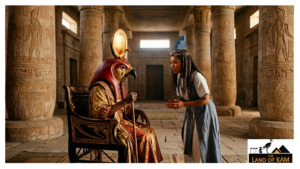
What is Kemetic Spirituality?

In general, Kemetic spirituality (also called Kemetism) is defined as a modern reconstruction of ancient Egyptian religious practices, concepts, and principles. However, transitioning to Kemetic spirituality is very challenging to many individuals because they must first dismantle deep-seated psychological, social, and structural conditioning. It often begins with internal conflict over traditional religious upbringing, as Abrahamic faiths stigmatize ancestral practices and non-Western spiritualities. Seekers must first heal religious guilt and fear of social rejection before exploring new metaphysical concepts. The digital landscape adds complexity: rigid, academic Egyptology and strict Kemetic Orthodoxy contrast with unverified conspiracy theories and predatory teachers, making discernment difficult. Without a physical community infrastructure, practitioners must self-construct spiritual frameworks and altars, often alone. Additionally, centuries of Eurocentric erasure have made Kemetic spirituality feel alien; only through Afrocentric reconnections to African traditions can its principles be fully embraced. The real challenge lies in clearing psychological and historical debris to reclaim this spiritual path safely.

So to put things in perspective, here are a set of core components to Kemetic spirituality as they are observed and practiced in Kamta (or Kamta Kemetic Shamanism), which is a practical blueprint for reconnecting with ancient African spiritual roots, utilizing Kemetic theology, West and Central African philosophy, Afro-Diaspora spiritual traditions, and spiritualism for empowerment, protection, and growth. The term “shamanic” is used intentionally to denote its practical, experiential nature, separate from dogmatic or institutionalized religion. Central to most shamanic traditions is the ability to communicate directly with the spiritual realm. Therefore, in Kamta, practitioners do not rely on institutional intermediaries (like a church hierarchy) to reach the divine. Instead, they work directly with ancestral spirits, higher guides, and the Neteru (archetypes/divine forces) through altars, divination, and ritual journeying.

The Core Beliefs of Kemetic Spirituality

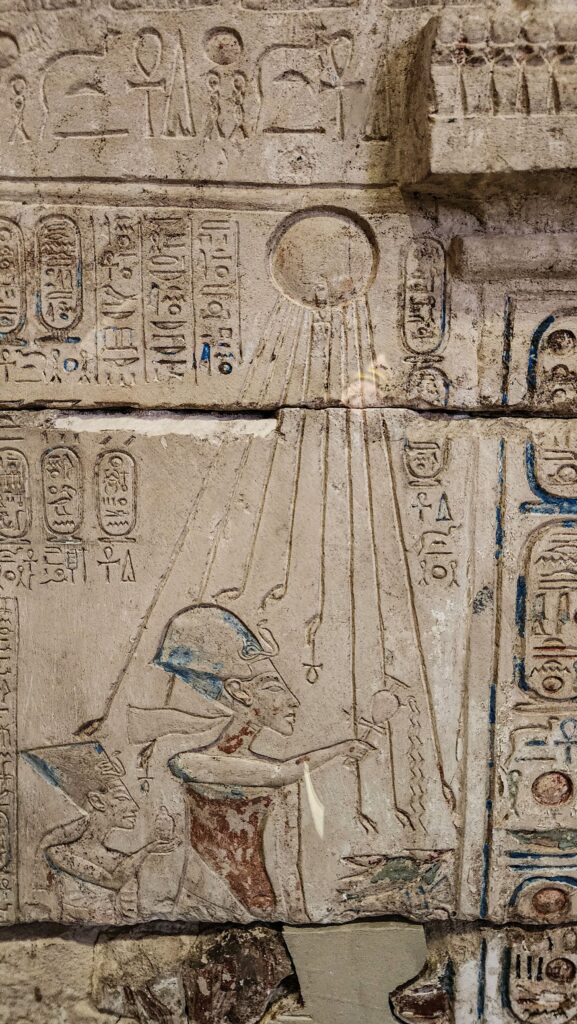
Although it is promoted by archeologists, historians, and biblical theologians that the ancient Kemetic people worshipped numerous gods and briefly flirted with monotheism in the 14th century BCE during the rule of Pharaoh Akhenaten (Amenhetep IV), who literally promoted the worship of the Kemetic sun, Aten.

In The Book of Knowing the Evolutions of Ra and of Overthrowing Apep, which is a physical manuscript consisting of a collection of Kemetic rituals and stories that survives and comes from the Bremner-Rhind Papyrus believed to have been compiled during the New Kingdom (c. 1570–1069 B.C.). The content and traditions within The Book of Knowing the Evolutions of Ra and of Overthrowing Apep are believed to have evolved and been developed during the Middle Kingdom (c. 2040–1650 BCE) or Kemet’s “Classical Age,” when Pharaoh Mentuhetep II reunited Upper and Lower Kemet and promoted artistic and literary advancement among his people.

Who is the Kemetic Supreme Being?

We find that the Supreme Creator and Almighty God in the ancient Kemetic religion was called Nebertchar (Neberdjer), which is an omnipotent and omnipresent title that translates literally to the “Lord of All” or “Lord of Everything.” In The Book of Knowing the Evolutions of Ra and of Overthrowing Apep, Nebertchar states repeatedly that no other existed before him and that everything that exists came into existence because Nebertchar willed it into existence.

pexels-philippe-donn-1169754

According to the Papyrus of Ani, Nebertchar is self-created, the one and only being who emerged from Nyun (the primordial waters of nothingness), thereby indicating that Neberchar is infinite. To create the known universe, Nebertchar caused a primeval mound to emerge from Nyun, which established the Maa. Then, Nebertchar transforms to Atum and asexually creates Shu (dry air) and Tefnut (moist air), which means that Nebertchar is a genderless, supreme cosmic force that transcends the physical realm and is beyond human comprehension.

The Ani’s text states that Nebertchar transformed into Khepri (Khepera—the divine scarab) to bring things out of the Nyun, similar to how scarab larvae emerge from the nothingness of dung. For this reason, Nebertchar was not worshipped directly, and there were no anthropomorphic descriptions of Nebertchar. This is also the reason there were no shrines, rituals, or images of Nebertchar. The Papyrus of Ani further states that humanity was created from the tears of Neberchar’s eye, which is called Ra, symbolized as the sun.

Who and what is RA?

In the Story of Ra & Oset (also called the Legend of Ra & Isis), Oset tricks Ra into revealing his secret name by creating a poisonous snake out of Ra’s saliva. When the snake bit Ra, since it was created from Ra’s spit. The poison spread rapidly through Ra’s body and caused him immense agony while taking vital strength away. Ra tried everything to cure himself but could not, so he cried to his children to help him, but no one could. Finally, Oset (Isis) appeared and told Ra that she could heal him but that she needed Ra’s secret name to do so. However, instead of Ra revealing his secret name, he boasts to Oset how he has created everything, and he states, “I am Khepera in the morning, Ra at noon-day, and Temu in the evening.”

The other names that Ra gives Oset indicate that Ra is not Nebertchar (the supreme being) and is not the Sun (Aten). However, when these other names that Ra gives Oset are aligned with moments of the sun. They reveal that Ra is the personification of Nebertchar’s life force or power of God and that Ra’s secret name is Amun Ra. 
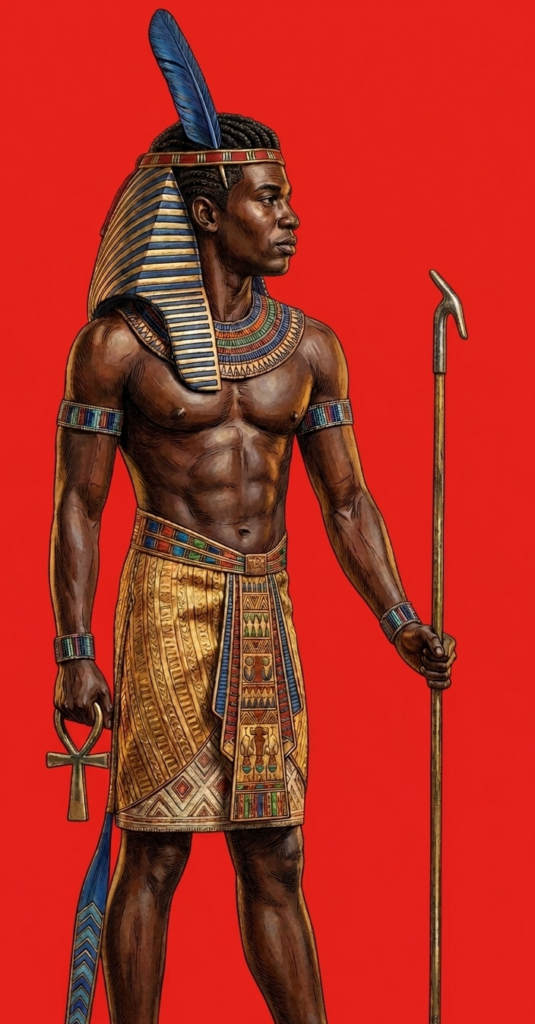
Who and what are Shu & Tefnut?

Shu and Tefnut represent the ancient Kemetic philosophical concept of dualism. Together Shu and Tefnut are like two sides of the same coin, working together to shape everything in life. 

SHU

TEFNUT

Positive

Masculine

Active

Sun

Logical

Hot 

Hard

External

Day

Cause

Expansive

Negative

Feminine

Passive

Moon

Intuitive

Cold

Soft

Internal

Night

Effect

Contractive

Shu and Tefnut represent the ancient Kemetic philosophical concept of dualism. Together Shu and Tefnut are like two sides of the same coin, working together to shape everything in life. Instead of being fighting forces, they actually rely on each other, always blending and shifting to keep everything balanced and harmonious, similar to the Chinese yin and yang principles.

In Kamta, Shu and Tefnut are honored, symbolized, and reflected in numerous ways. For instance, on the Kamta het aakhu (ancestral altar), Shu and Tefnut can be seen as an elderly ancestral couple known respectfully in the Conjure, Rootwork, and Hoodoo traditions as Big Daddy & Big Momma.
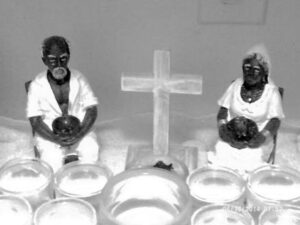
Het Aakhu (Boveda/Ancestor & Spirit Guide Altar)

Another common way Shu and Tefnut are honored is through the Eye of Ra and the Eye of Hru (Horus), typically displayed together as a reminder that Shu and Tefnut work together. 
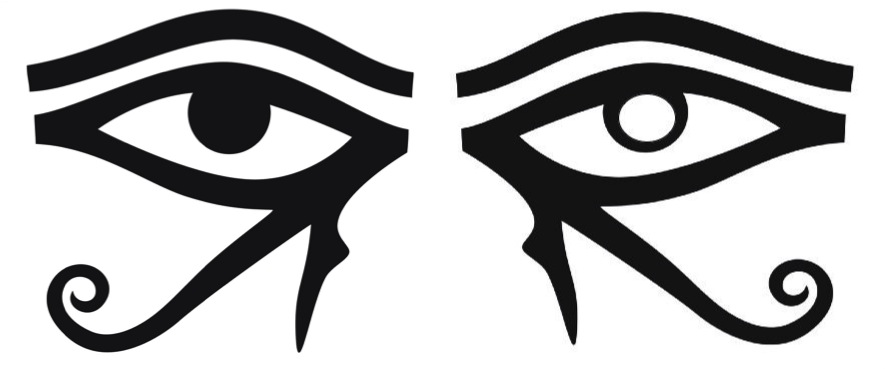
The Eyes of Ra (Provide a Holistic Perspective)
error: Content is protected !!